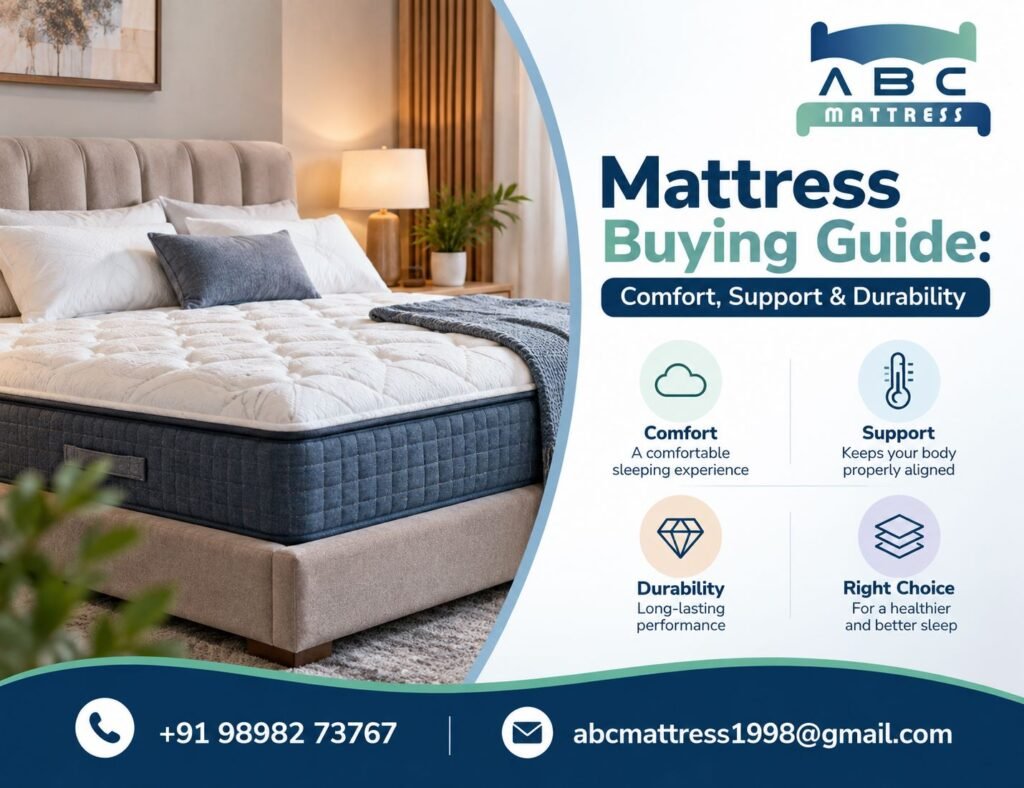
Mattress Buying Guide: Comfort, Support & Durability
Choosing the right mattress is an important decision because we spend a significant part of our lives sleeping. A good mattress should provide a comfortable sleeping surface while offering the support your body needs. With so many mattress types, materials, firmness levels, and features available, knowing what to look for can make the buying process much easier.
1. Focus on Comfort
Comfort is one of the first things to consider when buying a mattress. However, comfort can feel different for everyone. Some people prefer a soft and cushioned surface, while others feel more comfortable on a firmer mattress.
When choosing your mattress, consider:
- Your preferred sleeping position
- Your personal comfort preference
- The amount of cushioning you prefer
- Whether you share the mattress with a partner
- How the mattress feels when you lie down
The ideal mattress should feel comfortable without compromising the support your body needs.
2. Consider the Right Level of Support
Support is another essential factor when selecting a mattress. A mattress should provide consistent support across the sleeping surface and help you maintain a comfortable sleeping position.
Different sleeping positions may require different types of support:
- Side sleepers: May prefer cushioning around the shoulders and hips.
- Back sleepers: Usually benefit from balanced support across the body.
- Stomach sleepers: May prefer a firmer surface to reduce excessive sinking.
- Combination sleepers: Can consider a mattress offering a balance of comfort and responsiveness.
Choosing the right support can make your overall sleeping experience more comfortable.
3. Understand Mattress Materials
Mattresses are available in different materials and constructions. Each option can provide a different combination of comfort and support.
Common options include:
- Memory Foam: Provides cushioning and conforms to the body’s shape.
- Spring Mattresses: Offer responsive support through spring systems.
- Pocket Springs: Individually encased springs can help reduce movement transfer.
- PU Foam: Often used within comfort and support layers.
- Multi-Layer Mattresses: Combine different materials to create a balanced sleeping surface.
Understanding the construction helps you choose a mattress that matches your preferences.
4. Check Durability and Construction
A mattress is a long-term purchase, so durability should also be considered. Look at the quality of the materials and overall construction before making a decision.
Check these important points:
- Quality of materials
- Mattress construction
- Stitching and fabric finish
- Edge support
- Warranty period
- Manufacturer information
- Care and maintenance requirements
A well-constructed mattress can provide reliable performance over time when properly maintained.
5. Consider Breathability
Temperature can influence sleeping comfort. If you tend to feel warm during the night, consider mattresses made with breathable fabrics or airflow-focused construction.
Features such as breathable covers, ventilated layers, and airflow channels may help create a more comfortable sleeping environment.
6. Choose the Correct Mattress Size
Before purchasing, measure your existing bed frame and consider the available bedroom space.
Popular options include:
- Single
- Double
- Queen
- King
- Custom sizes
Make sure the mattress dimensions match your bed frame properly.
Conclusion
Choosing the right mattress is ultimately about finding the right combination of comfort, support, construction, size, and personal preference. There is no single mattress that is perfect for everyone.
Taking the time to understand these factors can help you choose a mattress that fits your needs and creates a more comfortable sleeping environment for years to come.